
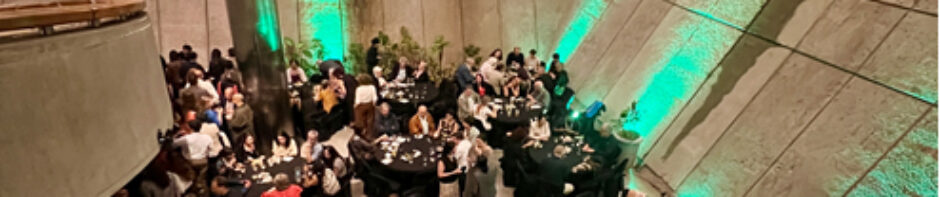
Temporary urbanism is an approach to reactivate urban spaces through short-term interventions in a range of urban contexts. In central São Paulo, the Luz and Santa Ifigênia neighbourhoods, characterized by deprivation of their physical environments and social structures, were the focus of this investigation. The Mungunzá Container Theatre and the General Osório Square, located within these neighbourhoods, were selected as case studies. Whilst the thermal performance of the container theatre itself was the main interest, in the case of the Square the fundamental issue was the environmental noise. The objective was to identify adequate strategies to improve environmental conditions in these locations in order to enhance positive social impact, and, then, contribute to the regeneration of these neighbourhoods. This research was based on fieldwork and analytical procedures of thermal and acoustic performances. In the container theatre building, the adoption of external shading and wider openings for ventilation reduced its indoor peak temperatures and delivered thermal comfort during the warmest period of the year. In the Square, sound absorber road surface material and an acoustic shell were proposed to reduce noise and promote better acoustic quality for outdoor performances.
The Environmental Performance Of Temporary Urban Interventions: Technical Assessment Of Regeneration Initiatives In The City Centre Of São Paulo, With Focus On Thermal And Acoustic Performance
The Effect of Increasing Vegetation Cover on Energy Demand for Heating and Cooling Buildings in a Dense Mediterranean City
The study examines the effects of adding vegetation to a Tel Aviv neighbourhood on the microclimate, and subsequently on electricity consumption for heating and cooling. Computer simulation was employed to generate modified weather files that account for urban effects in different building configurations. These files were then used as inputs for detailed computer simulation of building energy performance. Elevated night-time temperatures in the urban location increase summer cooling relative to the reference rural site, but reduce winter heating, resulting in a net decrease of 2-7% in overall electricity use for heating and cooling (depending on building characteristics). The reduction in the potential for cooling by night ventilation will increase the prevalence of air conditioning use and make buildings more vulnerable to potential loss of electric power during episodes of extreme heat. Implementing a strategy of extensive planting, so that a green surface fraction of 0.5 is obtained, results in a mean annual temperature reduction of about 0.3 °C and an energy saving relative to the current condition of about 2-3%.
In memory of Professor Baruch Givoni (1920-2019)
The PLEA community is sad to know that Professor Baruch Givoni has passed away on the eve of his 110th birthday.
“Sorry to hear the news of Prof. Baruch Givoni! ‘Man, Climate and Architecture’ was one of the most important books of the architecture programme. One can feel the commitment, enthusiasm, and love of the field between the lines. I was fortunate to meet the ‘Man’ in person at the PLEA Millenium Conference at Cambridge and had quite an in-depth discussion, where we even talked about having him on board as a cosupervisor for one of my students in Bangladesh, which he enthusiastically agreed. We will miss Baruch but we will always find the ‘Man’ amongst us when we will think about Climate and Architecture.”
— Khandaker Shabbir Ahmed, PLEA Associate
“It is with great sadness that I have heard the news of the depart of Prof. Givoni, one of our masters, a reference, an example, a reading companion in many educational journeys. Although this is a gap impossible to fill, this leaves us with the great responsibility to continue carrying on his fundamental legacy. Thank you, Baruch! ”
— Sergio Altomonte, PLEA Associate
“I had the prestigious opportunity of having breakfast with him in Florence. We later co-chaired a session at the TIA Confernce in 1997. Our email exchanges were rich in academic dialogue, with a common view towards keeping buildings cool, in our common hot climate, such as Israel and Malta.” His seminal work through books such as Man, Climate and Architecture and Passive Low Energy Cooling of Buildings remain the springboard of today’s extensive passive design literature and allied fields.”
— Vincent Buhagiar, PLEA Associate
“He had indeed contributed so much to our field and to the PLEA spirits – he was a very approachable person always ready to listen to students and colleagues!”
— Paula Cadima, PLEA Board Member
“Prof. Givoni was a very passionate and dedicated teacher. His work has inspired generations of researchers and practitioners in the field. I had the opportunity to work closely with him for some time. That was a really valuable experience that I still treasure today.”
— Vicky Cheng, a student of Prof. Givoni
“Besides his lifetime inspiring works, amidst my best PLEA memories are our talks during the annual conferences, since the late 90’s. I remember his recurrent questions every time we met: ‘tell me what are you doing with your students’, ‘do you have a poster?’, ‘let me see the data’. I am endlessly indebted for his kind words and invaluable advice.”
— Denise Duarte, PLEA Associate
“A pioneer of an evidenced based approach to environmental design in architecture. His research and writing has formed a foundation for much of what we do. His life and work deserve to be celebrated. ”
— Brian Ford, PLEA Associate
“I meet Givoni as a young master student of environmental design in some of the PLEA conferences in late 90s and early 2000 and was very much encouraged by his passion for the subject and his belief in bioclimatic architecture. ”
— Joana Carla Soares Gonçalves, PLEA Board Member
“This is really sad news and loss to our community. Many of us have professionally grown up reading his seminal books and publications.”
— Rajat Gupta, PLEA Board Member
“Man, Climate and Architecture was one of the books that changed my life. I have good memories of meetings with him. I bet looked him up on the internet, it seems he was a hundred years old. A remarkable man.”
— Dean Hawkes, Recipient of PLEA Award 2000
“Baruch was a very special person. He had so much to teach and so much patience. I have many memories of him while I was doing my Ph.D. at UCLA. We would meet at his home where we designed passive cooling systems which I would then build on the roof of Perloff Hall, UCLA’s architecture building. I would then collect data from the many series that we would test and take them to his home to analyze. His hello was always immediately followed by “did you bring the data?” with a special ring on “data” almost magical. We would spend hours and hours in his house analyzing the data in spreadsheets. He would never tire! When we were developing equations from this data, he would always tell me to develop the simplest equation that could explain the results. Simple is best. So many lessons. To this day I implement what I learned from him: design, build, test, and then analyze. I try to do this in my teaching, practice, and research. There is a little of Baruch in many of us spreading what we learned from him. He knew so much, yet he was so humble, happy, and friendly. I still remember the last time I left him at the airport, probably in his late eighties -we were always trying to estimate his age- walking to the boarding area. We need more like him. We will miss you Baruch! ”
— Pablo La Roche, PLEA Associate
“This is very sad news for most of the PLEA community because he was an ‘intellectual father’ for sustainable architecture and urban design. My condolences!”
— Sanda Lenzholzer, PLEA Board Member
“Prof. Emeritus Baruch Givoni passed away one month before his 100th birthday. Baruch was a pioneer and guide, thus worldwide acknowledged and respected; but he was also a very modest and friendly person, thus he was also loved by those that met him. He researched and published extensively, was active on numerous international organizations, and was honored with many prestigious awards. Baruch was lucid and active to his last days. We had the great fortune to supervise together research students and publish research papers on topics touching on the most recent practices and most relevant issues.”
— Issac Meir, PLEA Associate
“I read your book Man Climate Architecture when I was a student. I started to know you virtually. In 2003, I invited you to come to Hong Kong to teach in my MSc programme. From then on, I started to know you in person. We started to collaborate on projects and publish papers together. The most important lesson I have learnt from you has been that a scholar must keep the investigation simple by focusing on the most important line of thought, and solve a problem in the simplest way. For example, you always said, ”Why use an expensive equipment when a self-make ten-dollar device can give one the same data? And why use a complicated programme and a super computer when a simple equation can achieve the same analyses.” Students loved you too. They told me you were friendly, down to earth and hands on. They were surprised that you could spend hours showing them how to collate data using Excel and entering lines of data yourself; and you could stand-by under the sun supervising them how to connect the thermocouples. They told me you loved Chinese food and always challenged other overseas visitors to taste exotic Chinese dishes like chicken legs. Baruch, we will all miss you.”
— Edward Ng, President of PLEA
“His books were the first intense readings I encountered when I moved from being merely an architect to a PLEA researcher!”
— Ulrike Passe, PLEA Board Member
“I am so sad to hear this news – i loved him like many others – not only for himself – which was of course the prime motivation – his charm! but also for his academic brilliance and generosity. I profoundly trusted his judgement and if I want to know about a subject in our field and want the truth – i turn to his books. He combined extensive theoretical and practical research with common sense, always knowing what mattered in an argument. We really have lost the doyen of our field. In hearing the news I can only be thankful that he lived and worked in our realm of ideas.”
— Sue Roaf, PLEA Associate
“These is truly sad news! Many of us know his contribution very well and met him also in person.”
— Heide Schuster, PLEA Board Member
“His work was the basis of my master degree and natural ventilation – to this day – is part of my research. Thank you for your contributions! R. I. P. Prof. Baruch Givoni!”
— Alessandra Prata Shimomura, PLEA Associate
“His texts formed the background to my education in passive and sustainable architecture. The African proverb would be ‘a great tree has fallen’ , we have all taken shelter under the branches. ”
— Ola Uduku, PLEA Associate
“He was a hero of everything the world should have done and didn’t. He was a great figure both mentally and physically and an inspiration to may of us.”
— Brenda Vale, PLEA Associate
“I have just been informed of the death of Prof. Baruch Givoni, a PLEA founding member and one of our most respected and prolific teachers and researchers. I am grateful to have known him and for how much I learned from his books and lectures.”
— Simos Yannas, PLEA Board Member
“I am sorry to hear of the Professor Baruch Givoni’s passing. His contribution to knowledge has been instrumental in developing the understanding of man’s relationship with the natural environment.”
— Aram Yeretzian, PLEA Associate
Virtual Board Meeting in July 2020
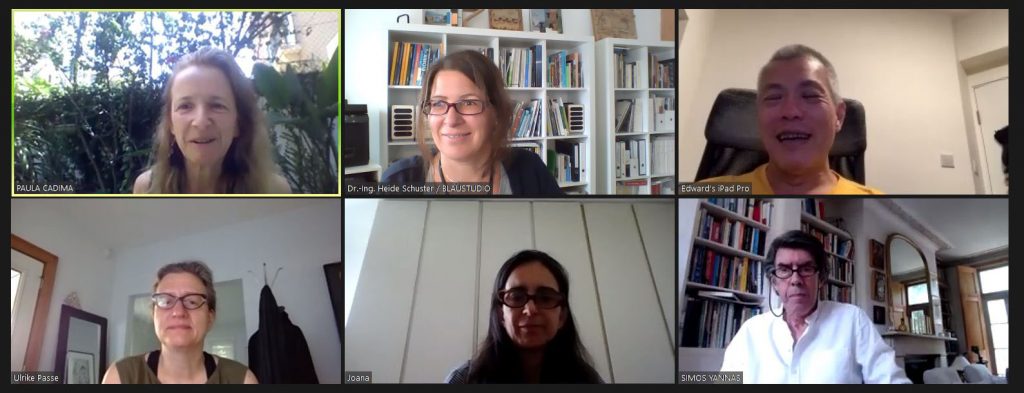
PLEA Directors met online to discuss management issues on 24th July 2020 .
State of the nation study on performance of new housing in the UK
A new report published by researchers at Oxford Brookes University has revealed for the first time a detailed national picture of the actual performance of new build homes through a detailed analysis of building performance evaluation projects.
The report has just been released and is available here: https://www.brookes.ac.uk/about-brookes/news/state-of-the-nation-study-on-new-build-housing-reveals-gap-between-design-and-reality/
The summary of findings is available here and an online presentation about the study is available here.
Windsor 2020 Comfort Conference Proceedings available
The Proceedings on the 11th Windsor Conference on Thermal Comfort “Resilient Comfort” is now available on:
In Memory of Charlie Brown
“Prof Brown’s timeless book “Sun, Wind & Light” has been an inspiration since I was a student. I am still using his book today when I need to advise students, professionals and governments. The PLEA community will miss him deeply, but he will be remembered.”
— Edward Ng, President of PLEA
20 Feb 2020, Hong Kong
“I studied under, worked for and then collaborated with Charlie for 30 years, including two editions of Sun, Wind & Light. I’m grateful for those many opportunities. As a young graduate student, Charlie’s methods brought mind expansion. Working with him was a challenge to order one’s thinking about the complexity of buildings, while always being a stand for the planet. It is a good voice to have in one’s ear.”
— Mark DeKay, February 2020, Knoxville, USA
Call for PLEA Small Research Project to PLEA Associates
The project should align with the objectives of PLEA.
The deliverable(s) of the project should benefit the PLEA community – for example, a PLEA Note.
From time to time, the PLEA Board may issue calls for proposals on a specific topic. Alternatively, PLEA Associate(s) may initiate and submit his/her/their proposal to the PLEA Board for consideration.
PLEA Associate(s) may submit his/her/their proposals jointly.
PLEA Associate(s) may submit his/her/their proposal anytime.
The proposal, not exceeding 3 pages, should contain the title, objectives, background, methodology, schedule, budget and the expected deliverables of the project. It should be submitted to the PLEA secretariat at <info@plea-arch.org>.
The maximum amount to be awarded is UKP1000.
At any one time, a PLEA associate can hold only 1 project.
Next PLEA conference 2020 @ Spain
The next PLEA conference will be held at A Coruña in Spain on September 2020!
Official website: https://www.plea2020.org/
Follow them: 


Nimish Patel – An Obituary.
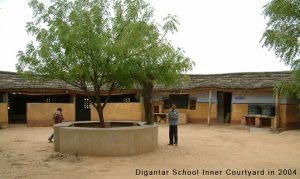
The architect Nimish Patel (1948 -2018) was a highly regarded champion of the value of traditional construction techniques and skills, combining innovation and conservation, to contemporary architecture. At the PLEA Conference in Ahmedabad in 2014 his outstanding contribution was recognised in the PLEA Lifetime Achievement Award. His work epitomises the ethos of PLEA in addressing social, cultural and environmental issues through a synthesis of building form and fabric, responsive to climate and using locally available materials.
Following his training in architecture at CEPT in Ahmedabad and MIT in Cambridge Massachusetts USA, he founded the architecture practice Abhikram with his wife and partner, Parul Zaveri, in 1979. Ambhikram (which means ‘initiation’ in Sanskrit) always valued traditional construction and skills. The firm’s mission is “to explore the design directions and processes which make the built environment functionally, psychologically, environmentally and spiritually, more contextual and more comfortable for all.”
The continuity of Indian traditions was central to their numerous projects, while responding to the contemporary context. Well known for his passionate engagement in many conservation projects, Nimish also believed that the services of an architect should be available to everyone, and his work included low cost projects like the Digantar Rural School, as well as high cost projects like the Oberoi Udaivilas Hotel in Udaipur. The practice’s work included a number of naturally ventilated and passively cooled educational projects, providing comfort without relying on mechanical conditioning.
Nimish shared his knowledge and experience freely. When I first met him in 1994 he introduced me to the very long tradition of climate responsive architecture in Gujarat, including step-wells, pol-houses and havelis. He opened my eyes to the sophistication of the techniques which moderated the extremes of climate long before the development of mechanical air-conditioning. My respect and admiration for him grew through our collaboration on the Torrent Research Centre in Ahmedabad. This involved the design of passively cooled laboratories and offices for a pharmaceutical research company. He insisted in putting his principles into practice: idealistic, but also intensely pragmatic, rigorous and demanding of those with whom he collaborated.
As much as anything I valued his deep humanity. Over lunch once, when we had been rather earnestly discussing mankind’s contribution to climate change, he said; “We want to change the world, but perhaps we should start by changing ourselves”. Always direct and honest, his clear thinking informed his projects, and we can all continue to learn from his legacy.
Brian Ford
Former Director and Vice-President of PLEA
Emeritus Professor University of Nottingham, UK.